
Relationships and shared support
What is a circle of support—and how does it relate to your NDIS care team?
A circle of support is a group of people who choose to spend time thinking and acting alongside a person with disability to support the life they want. It grows through relationships, shared interests and freely offered contributions. The person's wishes guide what the circle works on, who is involved and what help is welcome, with support to express those choices where needed.
A circle can work alongside an NDIS care team. Some people may be involved in both, but the circle is more than a list of services or app members. Its purpose reaches into friendship, belonging and the person's hopes for their life.
- For:
- People with disability, families and chosen supporters exploring circles of support alongside NDIS services
- Includes:
- Explainer, comparison and fictional circle example
- Time:
- 8 minute read
Published 23 October 2026 · Updated 23 October 2026
Written by Callum Cruikshank — Founder of Kinovo
Callum draws on his family's lived experience of coordinating support. These resources offer practical coordination ideas, not clinical, legal or NDIS funding advice. No independent clinical review is claimed.
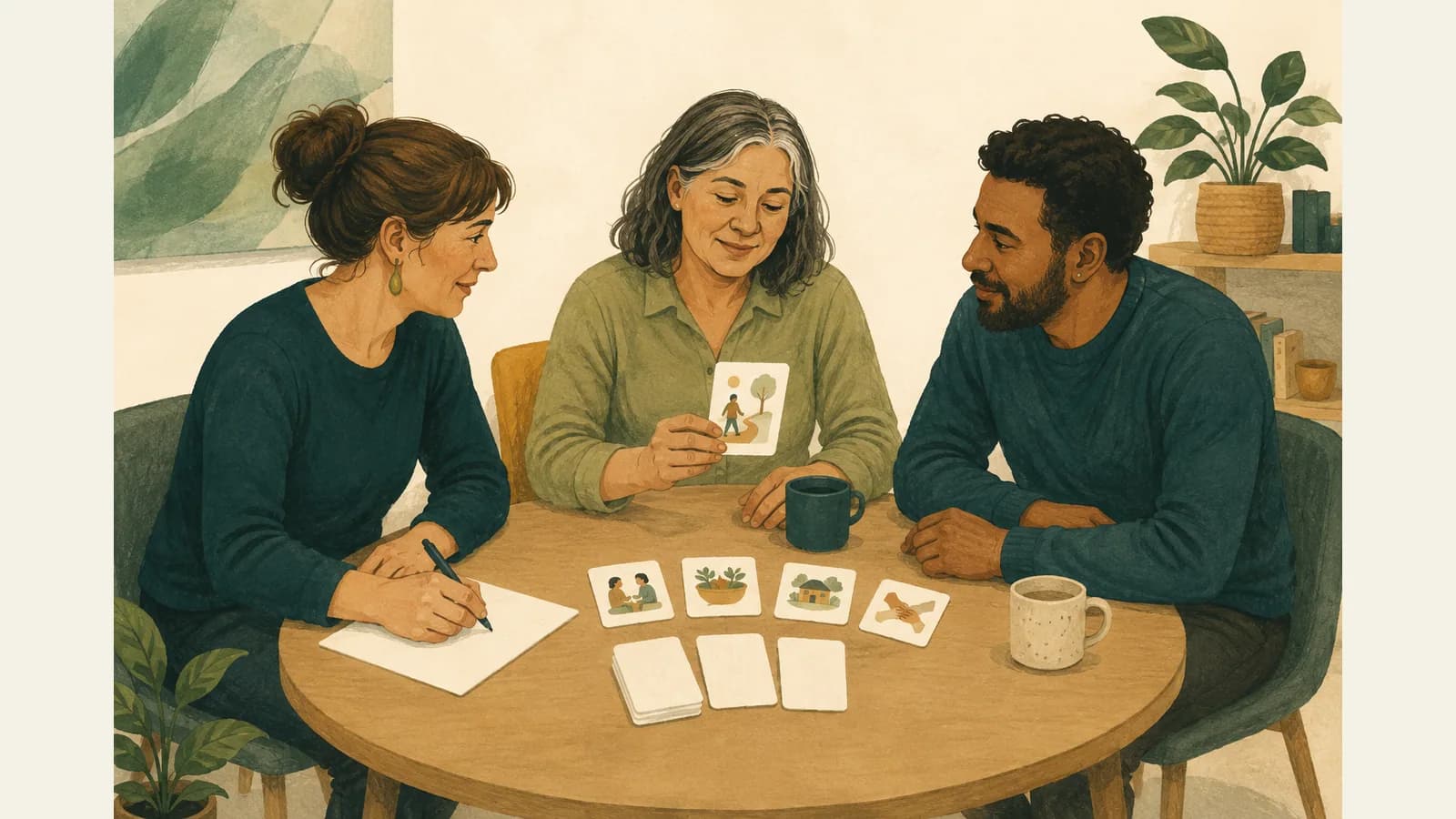
Relationships come first
In its circles of support resources, Imagine More describes people coming together voluntarily around a person's vision for their life. That might involve exploring work, a home of their own or a meaningful place in their community. Each circle takes its direction from that person's interests and priorities.
The conversation can be about ordinary things: finding people to share a hobby with, being invited somewhere again, or working out what would make a move feel possible. There can be practical actions, but there should also be room to enjoy being together and learn more about each other.
Community Resource Unit's resources on including others emphasise the value of relationships in their own right. A full schedule of paid services does not tell you whether someone has friends they enjoy seeing or people they can turn to. Those questions deserve attention too.
A circle, a care team and a workspace have different purposes
Here, 'care team' means the people involved in organising or providing someone's support. People use that term in different ways. The comparison below explains the purposes, rather than setting rules about which people must belong to each group.
- What it is
- Circle of support
- What brings it together
- Voluntary relationships and a shared interest in the life the person wants.
- What it might do
- Explore opportunities, make connections, think together and offer practical help.
- What it is
- NDIS care team
- What brings it together
- The person's support arrangements, including relevant paid and unpaid contributors.
- What it might do
- Coordinate agreed supports, professional contributions and practical follow-up.
- What it is
- Shared workspace
- What brings it together
- An agreed tool and appropriate access for the people using it.
- What it might do
- Keep relevant information, questions and accepted actions available to authorised members.
| What it is | What brings it together | What it might do |
|---|---|---|
| Circle of support | Voluntary relationships and a shared interest in the life the person wants. | Explore opportunities, make connections, think together and offer practical help. |
| NDIS care team | The person's support arrangements, including relevant paid and unpaid contributors. | Coordinate agreed supports, professional contributions and practical follow-up. |
| Shared workspace | An agreed tool and appropriate access for the people using it. | Keep relevant information, questions and accepted actions available to authorised members. |
The same sister, friend or coordinator might contribute to more than one of these. Being connected in software does not establish the trust, familiarity or commitment of a circle. A circle can also function without a shared app.
Who might the person want involved?
A circle might include relatives, friends, neighbours, former classmates or someone known through work or a community group. Start with the person: who do they enjoy spending time with, trust or want to know better? A family relationship does not automatically make someone the right choice.
Ask what involvement would feel comfortable. Someone may enjoy occasional gatherings and offer an introduction, while another person can help organise the next conversation. Let people say what they can realistically offer, including when they need to step back. Joining should not quietly turn into an obligation to provide care, money or ongoing availability.
The person at the centre should be able to participate in a way that suits them. That could mean pictures, extra time, a familiar supporter, a smaller conversation or a break. Check their views directly rather than treating a group's enthusiasm as agreement. What they prefer to keep private matters as much as what they want to discuss.
A fictional example: Nina wants a regular games night
Nina enjoys board games and would like a regular evening with people who share that interest. She asks her sister Jo, her friend Daniel and her neighbour Ruth to help her think about where to start. They meet over coffee, and Nina brings two games she wants to show them.
Daniel already knows a local library group. He offers to ask the organiser about joining for a visit, with Nina's agreement about what to say. Ruth can help check the venue's entrance before that visit. Jo offers to write down the options so Nina can consider them afterwards. Nobody assumes Jo will organise every evening or Ruth will become a regular driver.
Nina chooses a date and asks Daniel to go with her. Where she needs her usual paid support, the relevant arrangements are confirmed with the provider. The friends' offers sit alongside that support. Nina and Daniel are also looking forward to trying a game neither of them has played.
After the visit, Nina says she liked the people but found the room too busy. The next conversation starts with that feedback. They consider a smaller session and a games evening at home, and Nina decides which idea she wants to try. A completed visit is not treated as proof that the original idea was right for her.
This is an invented example, not a customer story. It shows people making specific offers, following through and listening again. The relationship continues to matter even if the first plan changes.
Paid professionals can contribute without defining the circle
CRU's resources on funded services and supports explore how formal services and freely given support can work alongside each other. A thoughtful arrangement gives each contribution a clear purpose while protecting the person's relationships and direction.
A coordinator might help arrange a discussion, or a clinician might explain relevant advice when the person wants that contribution. Be clear whether someone is attending as a professional, a facilitator or a voluntary member. Agree any professional work and its costs through the appropriate arrangements; an invitation should not create an expectation of unpaid professional labour.
The Resourcing Inclusive Communities circle manual discusses both the voluntary nature of circles and their limits. A circle is not a replacement for services or daily care. Some circles use a facilitator; others organise themselves. If paid facilitation is proposed, clarify its purpose, cost and funding rather than assuming NDIS funding will cover it.
Circle membership also does not appoint a guardian, create nominee powers or give someone authority over another person's decisions. Where independent advocacy, legal advice or clinical expertise is needed, seek that help through the appropriate person or service. A supportive group cannot resolve every question by agreement among its members.
Make a start that people can comfortably keep up
You could begin with a conversation about one thing the person would like more of in their life. Ask whom they would like involved and how to make the invitation feel welcoming. A circle does not need an impressive name, a large membership or a packed agenda to be worth exploring.
If someone offers help, clarify what they are offering and when to check in. Keep a brief note of what was agreed, using language the person understands. Share it only with the appropriate people and leave room for corrections. Follow-through can be useful without turning every friendly interaction into a recorded task.
If there are few people to invite, that is not a personal failure. Making connections may need time and support. The disability organisations linked below offer ideas and learning resources. Exploring a welcoming community activity or reconnecting with one person can be a reasonable starting point, without promising an instant circle.
If family roles are changing as parents age, our disability future-planning article explores sharing knowledge, discussing contributions and identifying questions that need advice.
A shared workspace can support agreed follow-through
Some circles keep notes on paper or use their existing communication arrangements. If relevant actions also involve a wider care team, Kinovo can keep shared goals, tasks, documents and care-team messages together. That could help someone find an agreed question or see who has offered to follow it up.
The authorised Team leader manages invitations and workspace access. Members contribute within their individual roles and permissions. Decide what belongs in that shared space; not every circle member needs an account or access to personal care documents. App permissions do not replace consent, relevant authority or the person's choices.
If your family and invited professionals need help keeping those shared actions together, explore how families use Kinovo. The circle itself grows through people choosing to be part of one another's lives.
Sources and further reading
Sources checked on 23 October 2026. These organisations offer learning resources about relationships and support circles; their inclusion does not imply endorsement of Kinovo. The fictional example is Kinovo's own illustration.
Disclaimer
General information about relationships and coordination, not clinical, legal or NDIS funding advice. Seek appropriate independent help for decisions needing professional advice.